

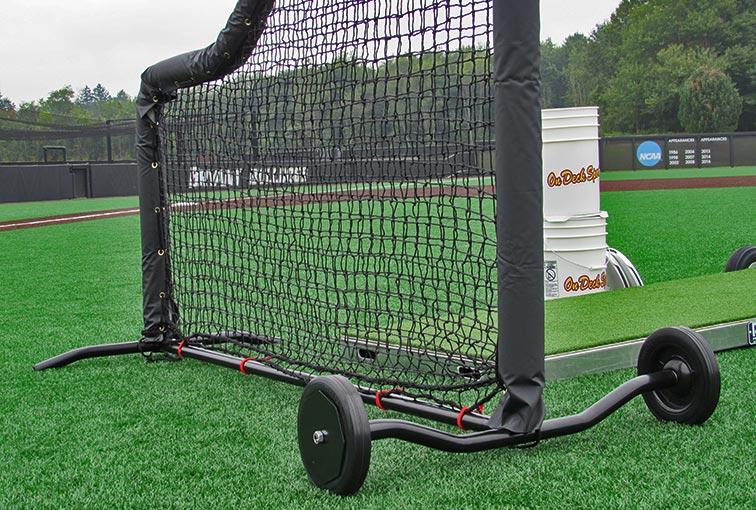
In the high-stakes environment of baseball and softball training, the pitcher’s mound is often the most dangerous place on the field. During live batting practice, the distance between the pitcher and the hitter is remarkably short, leaving very little time for a pitcher to react to a ball hit directly back up the middle. As players get stronger and bat speeds increase, the exit velocity of a line drive can easily exceed one hundred miles per hour. This reality has made the L Screen Baseball Pitching Screen – Batting Cages Inc. an indispensable piece of equipment for every level of play, from youth leagues to the professional ranks. By providing a physical barrier that combines visibility with structural protection, the L screen ensures that coaches and players can focus on skill development without the constant fear of a catastrophic injury.
The Engineering of the Protective Barrier
The L screen gets its name from its unique shape, which features a tall vertical section and a shorter horizontal cutout. This specific geometry is designed to solve a fundamental problem: how to protect a pitcher while still allowing them to perform a natural throwing motion. The pitcher stands behind the tall, shielded side of the screen and reaches their arm over or through the lower cutout to deliver the pitch. This design ensures that the most vulnerable parts of the body, including the head, chest, and vital organs, remain behind a heavy-duty net at all times.
The construction of a high-quality L screen typically involves a frame made of galvanized steel or high-strength aluminum, draped with a double-layered pillowcase-style net. The netting is often made of weather-resistant nylon or polyethylene, designed to absorb the massive kinetic energy of a direct hit without tearing or rebounding the ball too violently toward the hitter. The weight and stability of the frame are equally important, as a screen must be able to withstand the impact of a line drive without tipping over. By creating this consistent physical shield, the L screen acts as a primary line of defense that human reflexes simply cannot match.
Mitigating the Danger of High Exit Velocities
The primary safety benefit of the L screen is its ability to neutralize the danger posed by the “comeback” line drive. In modern baseball, hitters are trained to drive the ball back through the center of the field, which is often the most productive hitting zone. For a pitcher standing only sixty feet and six inches away, a ball hit at a high velocity leaves them with less than half a second to react. This is often not enough time to raise a glove for protection, let alone move out of the way.
Without an L screen, a pitcher is essentially a stationary target. Even the most athletic pitchers are at risk of suffering facial fractures, concussions, or broken limbs from a ball hit back at the mound. The L screen removes this variables from the equation. It allows the pitcher to follow through with their motion safely, knowing that the screen will intercept any ball traveling toward the “danger zone.” This protection is especially vital for coaches who throw hours of batting practice every day; the cumulative risk of being hit increases with every pitch thrown, making the screen a mandatory requirement for long-term safety.
Conclusion
The L screen is much more than a simple piece of metal and netting; it is a foundational safety tool that allows the game of baseball to be practiced at its highest intensity. By providing a specifically engineered shield that protects the pitcher without hindering the game’s mechanics, it addresses the most significant physical threat on the diamond. The reduction in injury risk, combined with the psychological confidence it gives to pitchers and coaches, makes it an essential investment for any serious baseball or softball program. In a sport where a split second can make the difference between a great play and a dangerous accident, the L screen serves as a constant, reliable guardian that keeps the focus where it belongs: on the development and enjoyment of the players.
