

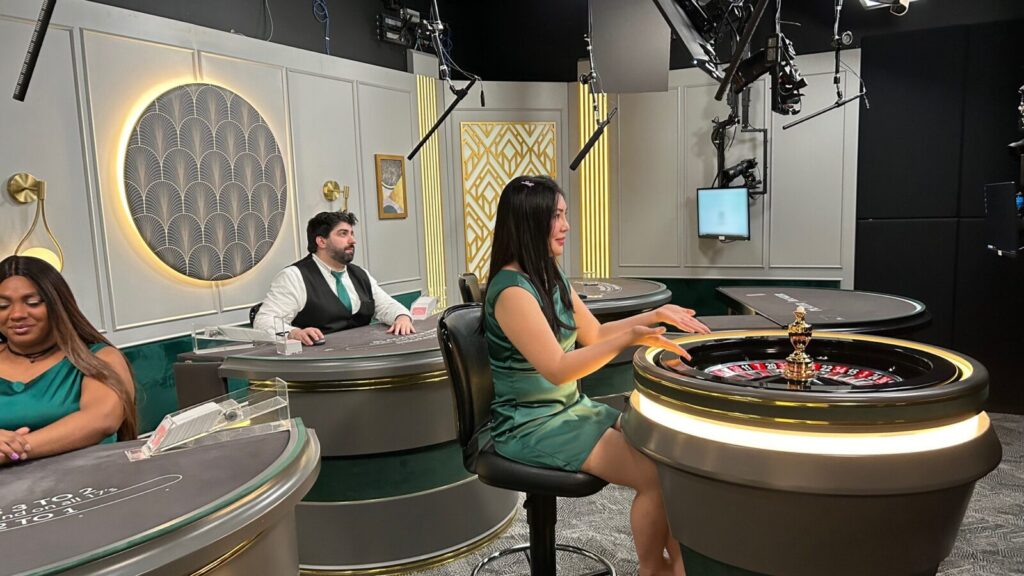
Live dealer tables maintain a realistic flow, while the joylink free credit terbaru stays independent from gameplay. The camera setup is central to achieving that goal. A single fixed angle would show the table but miss the detail that makes each deal feel genuine. Multiple cameras solve that problem by covering different perspectives within the same session, switching between them as the game moves. Players watching a live session see more than one view of the same deal, and that coverage changes how the game is experienced on screen.
Clarity at the table
Live dealer setups position cameras at multiple points simultaneously to cover the table. A wide-angle photograph captures the entire layout, the dealer’s position, and the general environment. Cameras switch into close-up when cards are placed or revealed. That shift in camera angle at the point of dealing is not decorative. It gives players a direct view of each card as it lands. Baccarat tables use this approach for every deal. The close-up camera confirms the face value of each card clearly as it is turned. Blackjack tables do the same across both the player’s and the dealer’s hands. Players who might otherwise question what was dealt can see the result directly rather than relying on a numerical display alone.
Building session trust
Trust in the dealing process matters across every live table session. Multiple cameras contribute to that trust directly. When players can see the shuffle, the cut, and the deal from an angle that leaves no part of the process obscured, questions about the accuracy of results become unnecessary. Some tables include an overhead camera positioned directly above the card zone. The angle removes perspective distortion from side-view cameras, revealing each card face clearly. This level of camera coverage creates an environment for players to focus on the game rather than the delivery mechanism.
Dealer presence on screen
Camera placement also covers the dealer directly. A dedicated camera angle on the dealer’s face and upper body keeps the human element of the session present throughout play. Players see reactions, hear the dealer call results, and follow hand movements as cards are managed across the table. That presence separates live dealer sessions from standard digital equivalents. The dealer is not a background element. They are central to the session, and the camera arrangement reflects that by keeping them visible and clearly framed at all times during active play.
Production across formats
Different live game types use camera setups tailored to their specific table layout and pace.
- Roulette tables – Use a wheel camera, a close-up ball-track camera, and a wide dealer view during each spin
- Baccarat tables – Carry an overhead card camera alongside the standard dealer and wide-angle positions
- Blackjack tables – Position cameras to cover both the dealer hand zone and the player hand area across multi-seat layouts
- Game show formats – Use broader multi-camera rigs that cover presenters, wheels, and bonus features within the same frame.
Each setup is built around what the game requires players to see clearly across a full session. Multiple cameras at live tables are a practical solution to a visibility problem that a single angle cannot solve. Every additional camera position adds a layer of clarity that keeps the session grounded in what is actually happening at the table.
